
Trellising: Accountability
As I turned the corner out of my neighborhood, I noticed the orange warning light on my dash, indicating that one of my tires was low. This had been happening for a few months, off and on, and it seemed that one of my tires just had a very slow leak somewhere, or maybe the tire sensor was going bad. I had been adding a little air to the tires as needed, and the warning light would go off. Since I was just heading to the garden store a few miles away, I decided to keep going and add air when I returned home.
I eased onto the 101 South and, increasing my speed, I pulled over into the fast lane to avoid the Sunday drivers. My zippy Lexus convertible has an 8-cylinder engine, and I love listening to the restrained purr as it increases speed. I drove along in silence for a few miles, smiling about the sunny day and thinking about the plants I wanted to get. Glancing at the warning light again, I decided it might be a good idea to put both hands on the wheel, just in case.
Within seconds of making that decision, I felt a rumble and bump from my back left tire. What I thought in that moment, I cannot print here. Recalling that I supposedly had “run flat” tires, I hoped I could make it to a shoulder, quickly. As I slowed down and put on my right blinker, I checked the rear-view mirror to move across traffic. Not only were cars coming quickly, but, to my horror, I saw my tire bouncing along behind me and crossing traffic too!
Miraculously, I made it safely to the shoulder without any damage to my rims, and the tire did not cause an accident, spinning to a stop on the shoulder. A little shaken and very grateful, I called my husband, then AAA. Both came very quickly, and within an hour my car was parked at the tire store, waiting for Monday and four new tires.

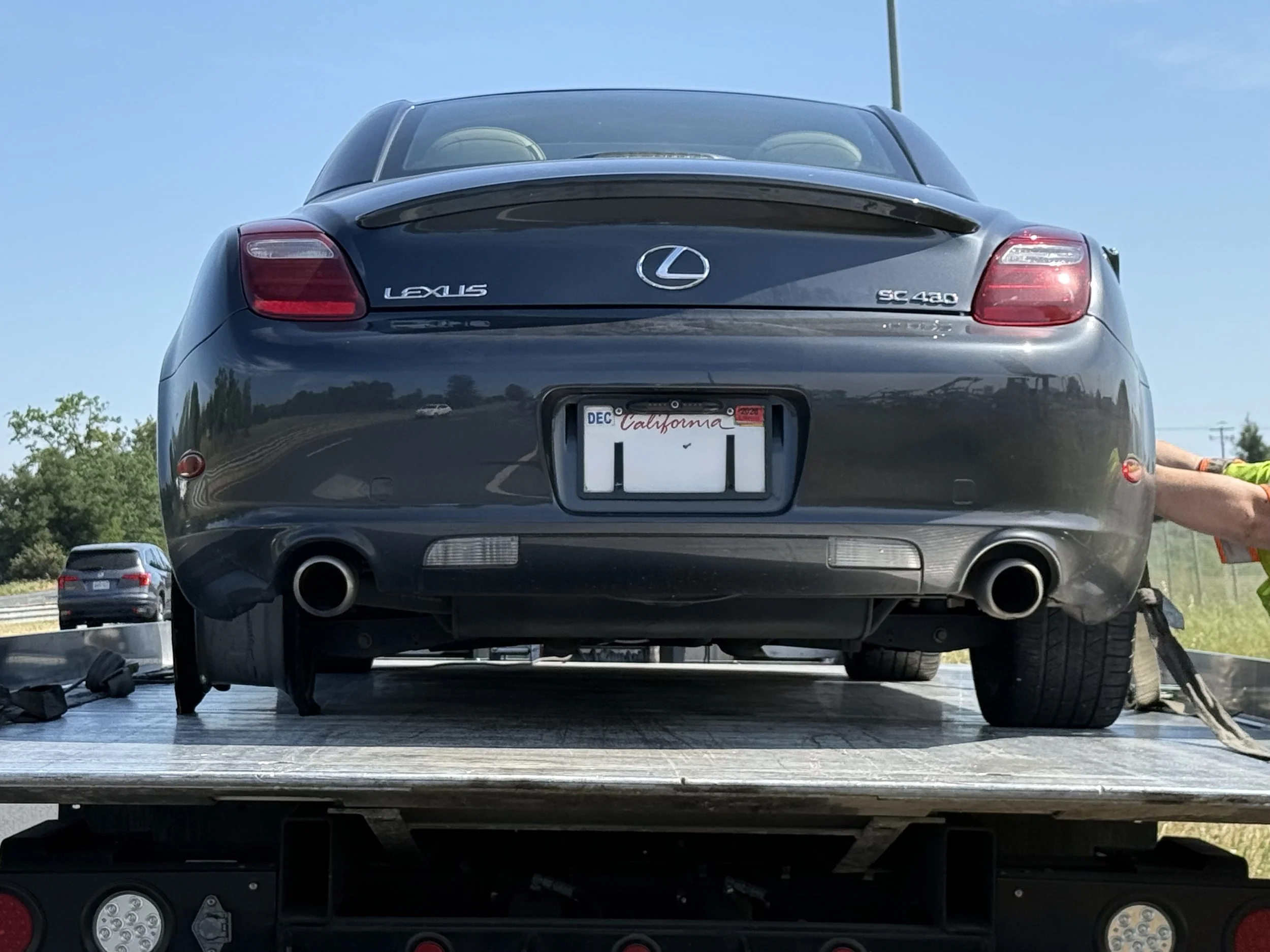
As I’ve reflected on the fact that I’m still alive and well, I realize the warning light was there to support me, give me information, and keep me safe. You might say, the warning light was a system meant to help me, if I let it. I can’t help but wonder what that afternoon would have looked like if I’d heeded the warning and put a little air in my tires before I’d gotten on the freeway.
In the Vineyard
In a similar way, there are systems in a vineyard, like trellising, that help vines to flourish. The vine must be trained to the trellis in order for the trellis to do the work it was intended to do.
Half of my baby vines grew wildly last year. The other half…not so much! In February, when the time came to prune the vines, my vineyard guy, Juan* came to teach me about how to train them as they grow. The 12 vines that hadn’t grown much were cut way back, so they could continue to develop their roots. The 12 vines that had grown long canes were heavily pruned, except for two branches that Juan identified as the ones we would attach to the trellis in order to begin the process of training them into a cordon. He counted out eight buds along the branch and clipped off the rest. As he carefully bent the vine down to meet the trellis wire, I could hear the branch crackling a bit as if it might break, protesting the loss of freedom. I looked at Juan, and he smiled. “It will be okay,” he said. I was a bit worried, but no branches were broken in the process.
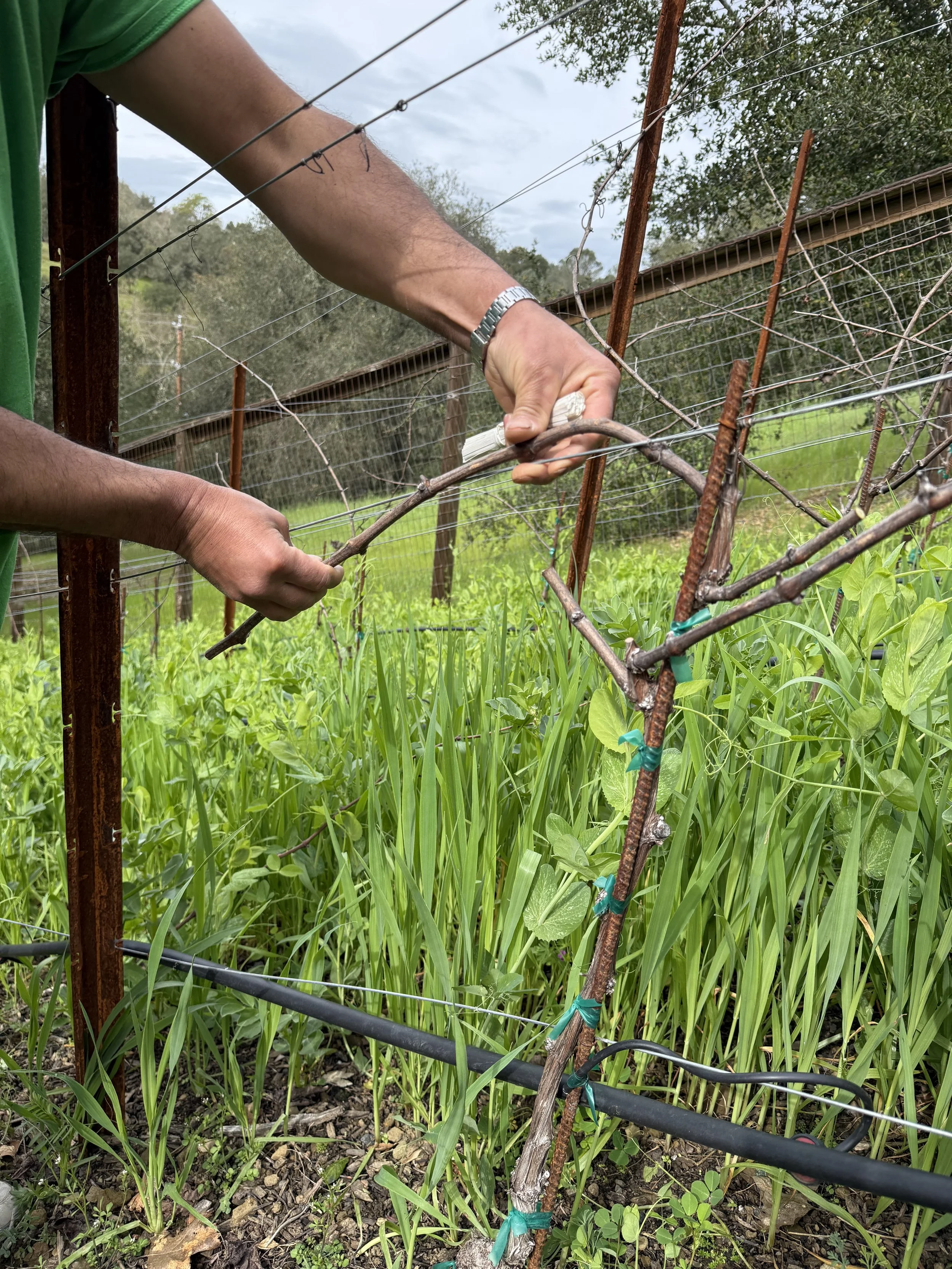
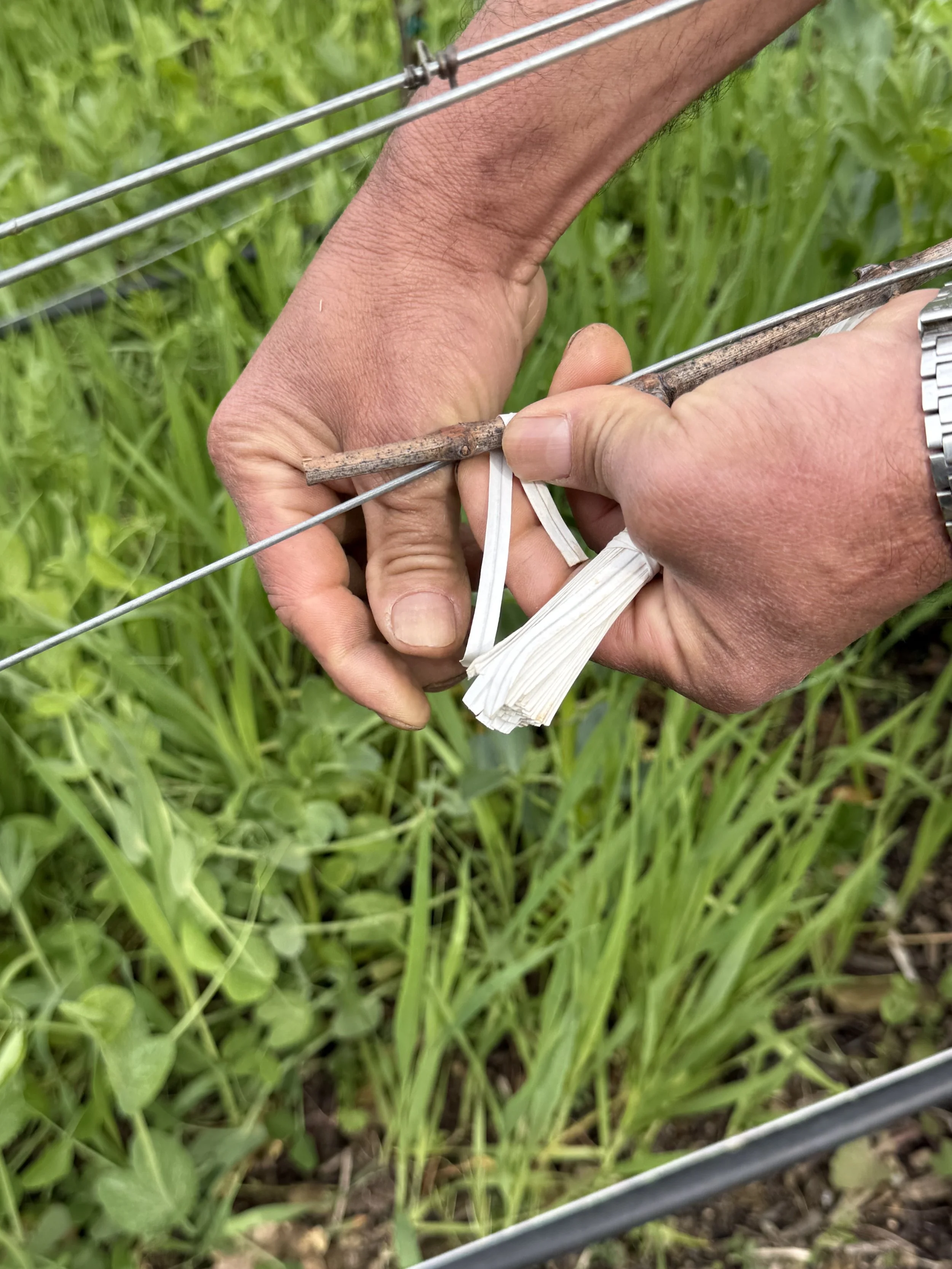
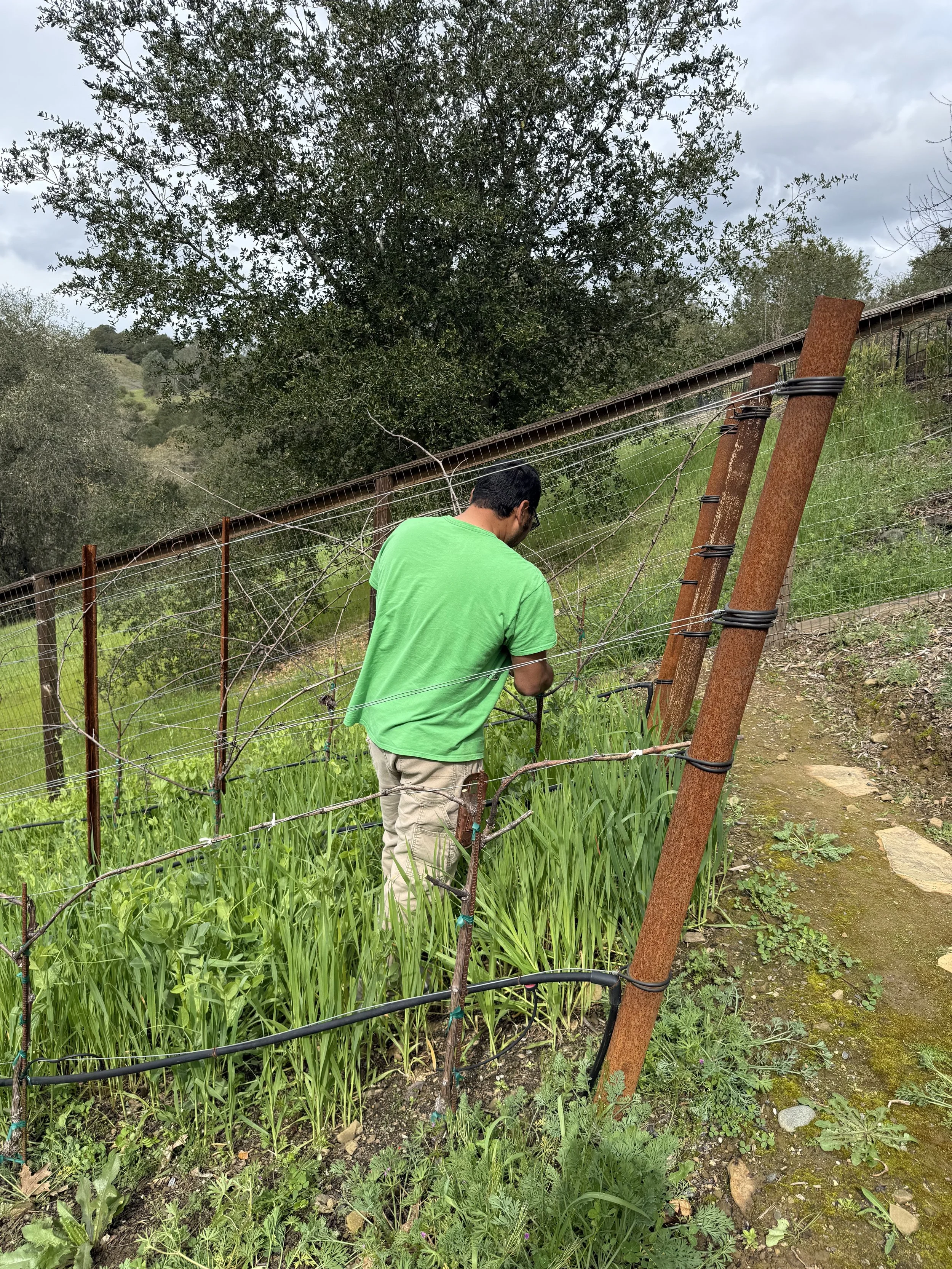
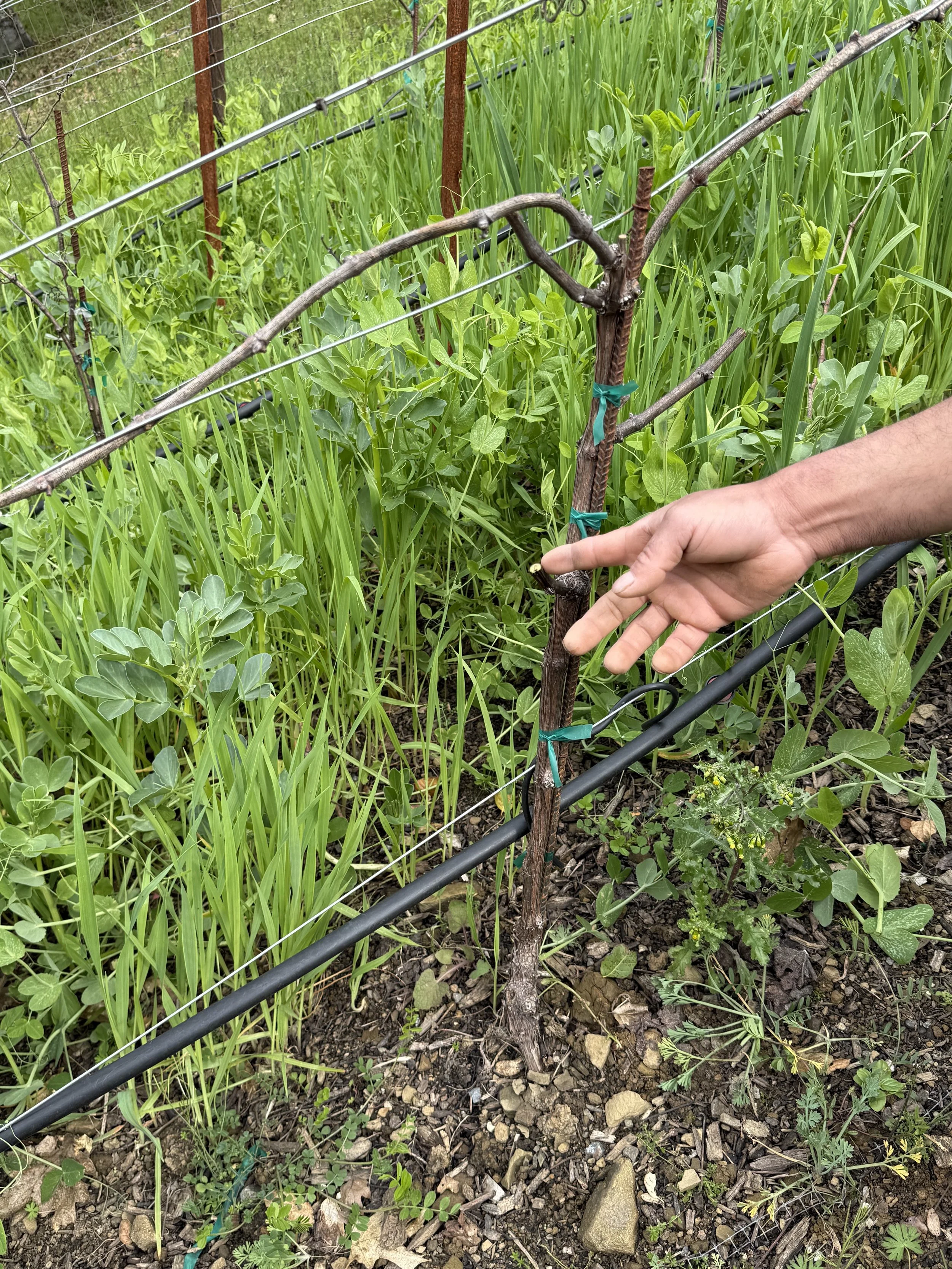
This structure will help keep the vines strong and producing healthy, evenly distributed fruit. Now that bud break has happened and the exuberant shoots, leaves, tendrils, and inflorescences are adorning the vines, it is incumbent on me to continue to provide a structure and move the pliable shoots into a position for maximum flourishing.
As a Metaphor
Recently, I wrote about how character develops over time through small, often unseen choices and actions, using the metaphor of bud development.
The metaphor of tying vines to a trellis describes the accountability needed to develop character that produces balanced and sustainable virtues. Like a vine that needs a structure to flourish, we need to be connected and accountable to something or someone outside ourselves to develop character. When we are held accountable for our words and our actions, we are given a chance to develop character.
Think of it this way… the personality of the vine is to grow wildly toward the sky until it is too heavy with fruit and then drape towards the ground. The branch could break, leaving the vine susceptible to disease, and the fruit and leaves could end up dirty and vulnerable to pests. Even though it might seem like a lot of trouble or too much of a constraint to tie a branch down to a trellis, it trains the vine towards long-term flourishing.
Sometimes we confuse the idea of personality with the idea of character, and we’ll say something like, “Well, that’s just the way I am! ” For example, I tend to shrug off warnings that something bad might happen, like the warning light on my dash. I can easily describe other situations that either worked out well or very badly when I followed my nonchalant attitude towards risk. I like this carefree aspect of my personality, and I don’t really desire to change it. However, I’m grateful for the systems and the people in my life that hold me accountable when I get a little too relaxed. If I had been more accountable to the warning system, I might not have been thrown into a risky situation on the highway. I also would have had a much more enjoyable afternoon!
Character development involves discernment, decision, and discipline.
First, we must discern the contours of our personality and understand which aspects might keep us from flourishing. Then we must decide to submit to some kind of accountability system that will help train or guide us towards a healthy outworking of our personality. Finally, we must be disciplined in the myriad small, often unnoticed, actions that will build and solidify a sustainable outcome.
In Life and Leadership
In your organization
Every organization has a personality, often heavily influenced by the founder and current leaders. How would you describe the personality of your organization? Are there places where the personality needs some accountability to develop a desired character trait? Perhaps, you could consider a type of “trellis” system that would guide the character development and create an environment for sustainable flourishing.
On your team
Each person on your team brings their personality to the team. Maybe the personalities have chafed against each other at times. What kind of accountability is in place to support each other’s character development? Is there enough trust among the team members to bring accountability, or would it be safer to look for accountability in other arenas?
We can help your team address trust issues and build accountability.
In your life
Undoubtedly you have taken a personality test (or three!). If you have identified some aspects of your personality that could potentially derail your flourishing, what accountability “trellis” of character development could you install to ensure ongoing healthy fruitfulness?
Character development is a lifelong journey. A main component of success is a framework of accountability.
With you on the journey!
Susie