
Bud Development: Character Matters
Most Saturday mornings at 8 a.m. you can find my husband, Bob, sitting in front of his iPad playing Minecraft with his grandkids. Since three grandkids live in Switzerland, and the other lives in Canada, this is a fun way to stay connected. Everyone who is able to play, calls in to the Minecraft WhatsApp video chat, so all the faces are visible, and all the voices can be heard while they play in the Minecraft world.
If you’ve ever played Minecraft, you know it’s a collaborative, creative world built with blocks that has two modes. The first mode is “creative mode” where players can build out their own worlds to their heart’s content, using their craft table and supplies which they acquire throughout the game. The other mode is “survival mode” which requires the players to not only build out their world, but also survive monster attacks.
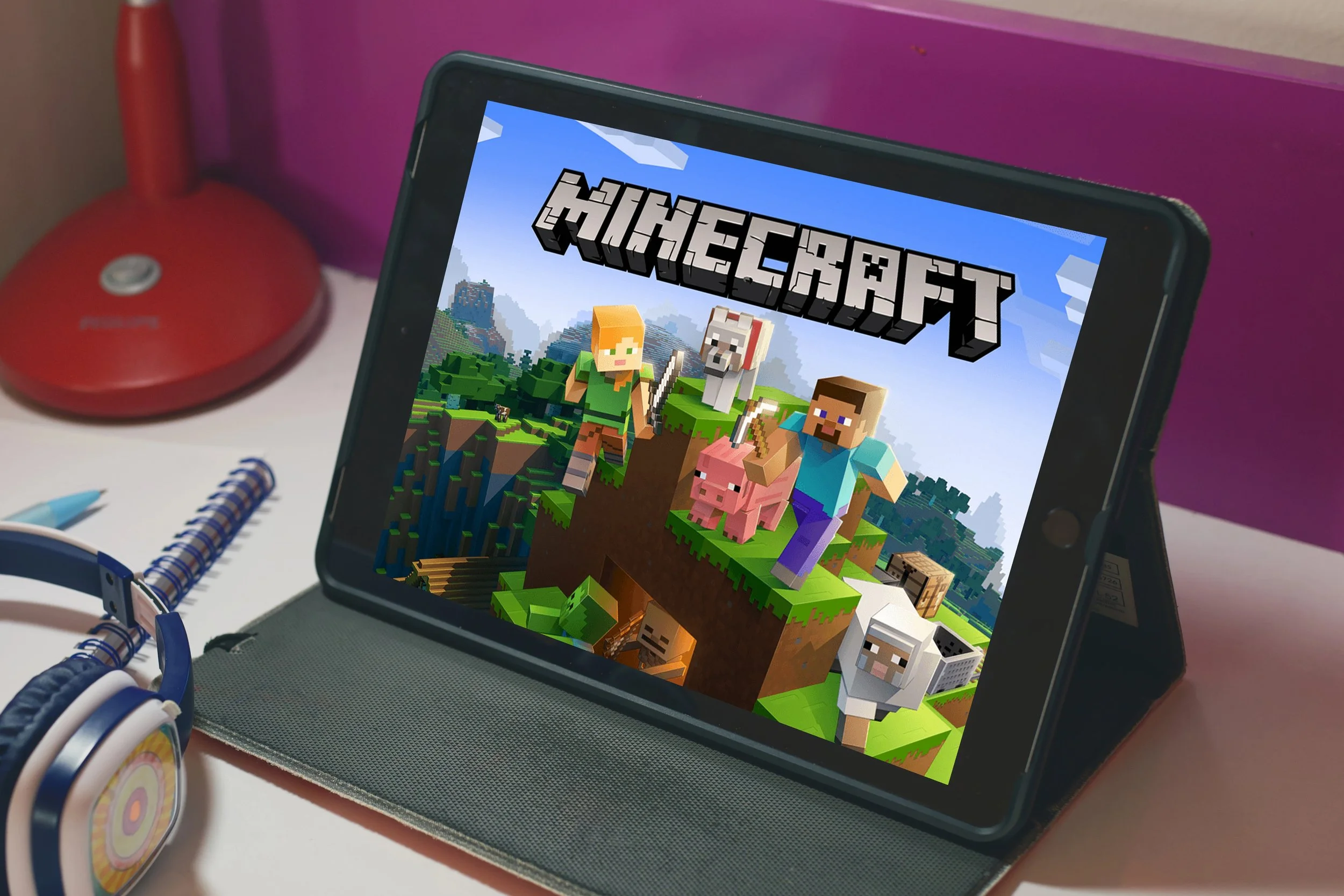
Since Bob is more interested in being with the kids than becoming proficient at Minecraft, his character (TheMystery111) mostly just stands around watching the other characters build. He loves the conversations and hearing the kids talk about stuff. Bob’s favorite is creative mode, but the digital native kiddos love the challenge and adventure of survival mode. Bob has the volume on his computer turned up (no ear buds for him), so I get to listen in. I can almost always tell when they’ve moved into survival mode by the tone of the conversation, which often goes something like this.
“Papa, don’t just stand there! You gotta kill the mob.”
“How do I do that, again?”
“Just use your weapon to knock them out!”
“Arrrgh… Do I have a weapon?”
“Yes, you do!
“How do I use it?? Oh, no… I just died!”
“Papa!!”
The incredulity and frustration become evident as their voices rise and get more urgent.
A month or so ago, after the Swiss kids had a particularly frustrating Minecraft experience and were discussing it at the dinner table, their wise parents asked this question, “Why do you think Papa plays Minecraft with you? Do you think he’s trying to get good at Minecraft?” The kids astutely answered that Papa just wanted to spend time with them. Of all the things he could do on a Saturday morning, he plays a game he doesn’t really love to be with the kiddos that he loves deeply.
There has been a stunning shift in Minecraft Survival Mode since that particular morning. The kiddos have rallied to collaborate and help the most vulnerable person in their midst… Papa! Now I (often) hear words of kindness, cooperation, respect, and empathy, which is a more fertile environment in which Papa can learn better Minecraft skills.
This is the kind of shift that exemplifies character development, a topic I’ve been contemplating as I witness the tiny buds slowly developing in my baby vineyard. The personalities of each kid can naturally trend towards criticism and impatience. With a loving nudge from their parents to discern how they might grow in kindness and appreciation, each small action of helping Papa contributes to the development of character traits, such as collaboration, humanity, humility, and temperance. To be certain, character development takes time and effort. Thanks to Minecraft and wise parenting, my grandkids’ character is slowly unfolding in the right direction!
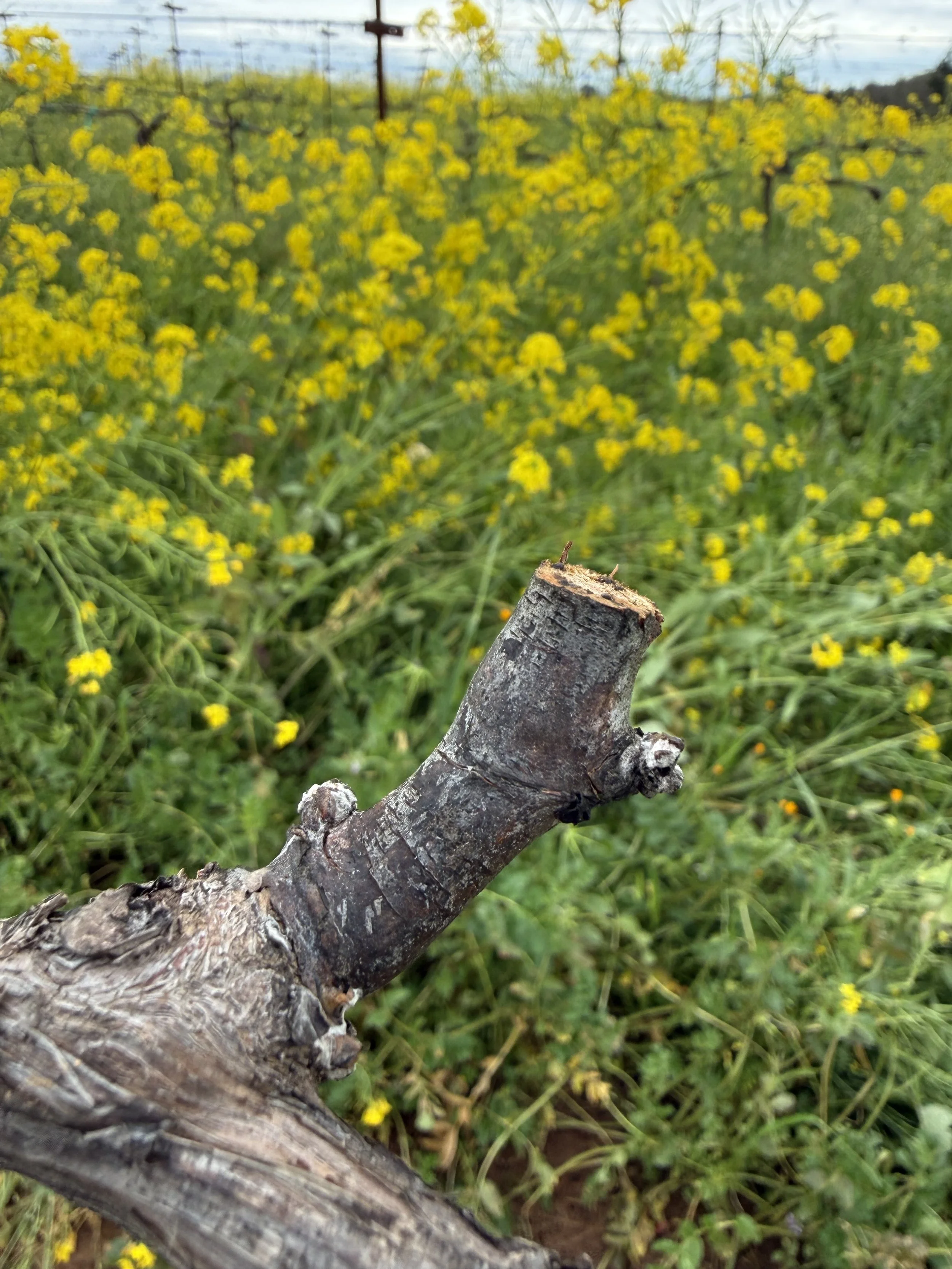
Two buds on a pruned cane; yellow mustard flowers in background.
In the Vineyard
Bud development is a metaphor for how character is developed over time through consistent, small, intentional actions. Whatever is being developed inside a person, often in the secret places, will eventually burst out. We can be sure the character we see on display in leaders, through their virtues or their vices, is not something they manufactured in a day. It was nurtured over time.
“I am who I am today because of the choices I made yesterday.”
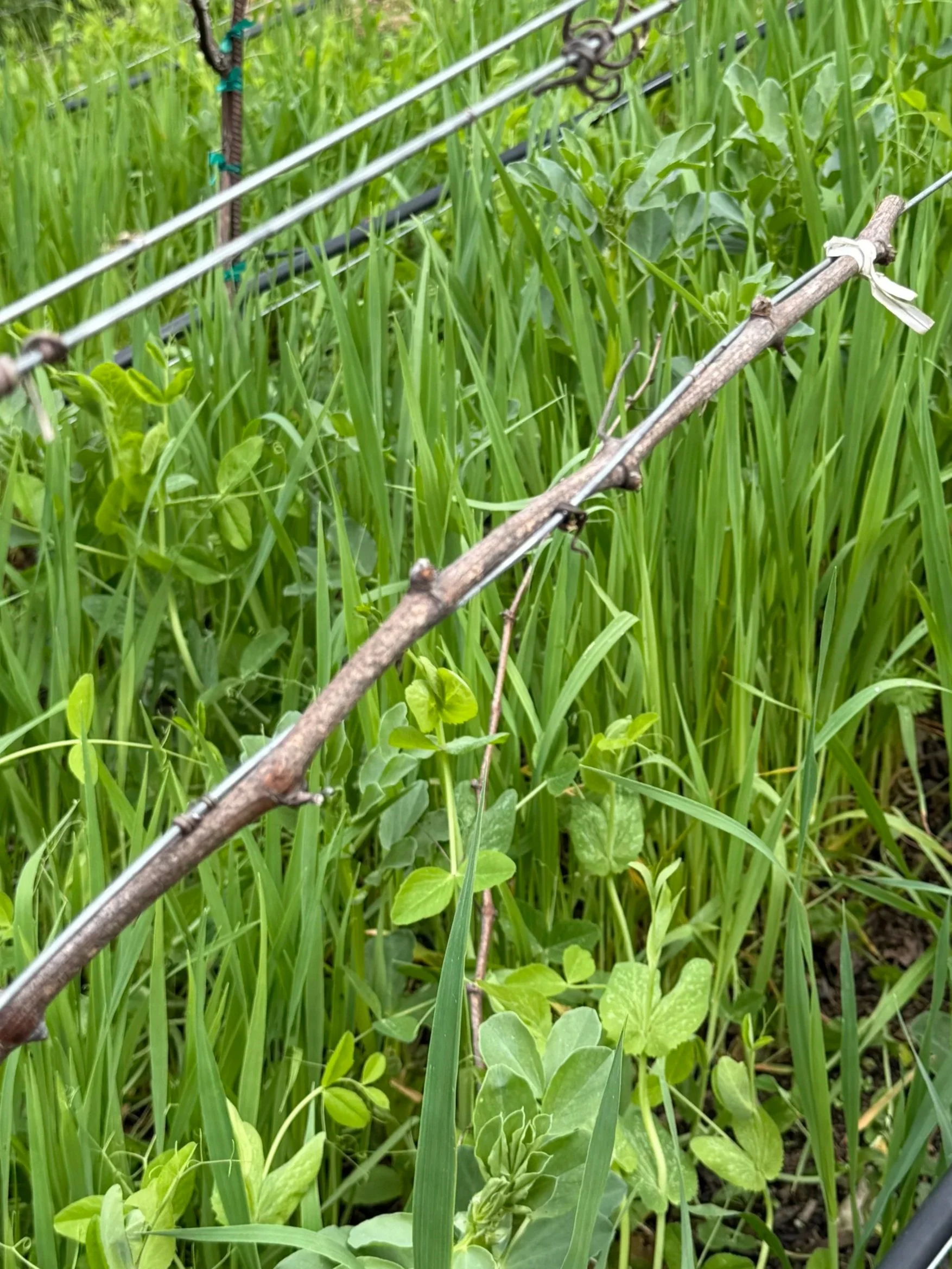
Buds on young vine; green cover crop in background.
Last week, in my baby vineyard, the buds looked like uninteresting brown nodes, but they didn’t just appear yesterday. They have been on a long journey. Since last year, the primordia, or the beginnings of shoots, leaves, tendrils, and fruit, has been quietly developing in the bud. I’m still learning how to encourage health in the vine, and I wasn’t particularly attentive last year, so it’s possible the buds are not super healthy this year.
Every bud has been in development for almost a year. Internal and external influences affect the health of the bud. Internally, the balance of the vine’s hormones, especially auxin and cytokinin, influence the development of the bud. Yes, vines have hormones! Cytokinin promotes root health and better nutrient transport, a stronger immune system, and an improved fruit set with better flavor. Cytokinin depends, in part, on soil that has the proper amount of calcium. Did I give the vines enough calcium last year? Who knows!?
Externally, the developing bud needs a good amount of sunlight. Too much shade could cause the primordia inside the bud to differentiate into tendrils instead of inflorescences that turn into fruit. Even summer canopy management affects next year’s fruit! Wine growers are never just farming for this year’s crop; they have their eye on the health of the vine and future harvests. I definitely did not do any canopy management last year. Ugh!
As a Metaphor
Much like the development of the bud, character development is complex. If I want to be a person of integrity, how would I pursue that character quality and how would I know when I achieve it? Like a beautiful cluster of grapes that is the result of a healthy bud, good character is observed through the fruit of virtue. Like an unhealthy bud that differentiates into tendrils instead of fruit, bad character is observed through vices.
Virtues that point to the character of collaboration include cooperation, collegiality, and flexibility. Vices are unbalanced and can be born out of deficiency or excess. Vices that point to a lack of collaboration are such things as being self-centered or conflict avoidant, being confrontational or being a people-pleaser, being inflexible or compliant.
“Small, intentional actions and choices over time produce character. The competitive edge for companies is not competency, but character. Character matters! ”
Most training for leaders is largely competency-based, and competency is good, but it’s character that contributes to sustainable flourishing. In fact, “…one study found that organizations with leaders of high character — those whose employees rated them highly on integrity, responsibility, forgiveness, and compassion — had nearly five times the return on assets of those with low character.” (MIT Sloan Management Review, Winter 2023)
In Life and Leadership
Organizational
What are the ways your organization values character and virtue? How does your organization honor people who exhibit high character and virtue? Take a look at the Leader Character Framework identified by MIT Sloan that identifies 11 dimensions of character to help you start to identify character in your organization.
Team
Do you have a purposeful character development track for your team? Check out this description of the Five Phases of Character Development. What do you find helpful in setting a path forward to support character development on your team?
Personal
This is where it all starts. What are some ways you are investing in your own character development? Adam Grant says “Personality is how you respond on a typical day. Character is how you show up on your worst day.” How are you showing up on your worst days? Without beating yourself up, how does this inform a learning path going forward?
On my worst day, I tend towards people pleasing and conflict avoidance. Noticing this is the first step towards character development. Leaning into cooperation and collegiality will train my personality towards a character trait of true collaboration.
Thanks for reading along. I hope this has been helpful. As I build out this framework of character development, I’d love to hear your thoughts.
Cultivating a flourishing life together with you,
Susie